Tom’s Statement on AI Use at SAW
AI is not a neutral technology
We at SAW have always recognized the role that technology can play in an artist's development, process and progress.
With every generation there are new exciting technologies that enable and excite a creative person.
In our own field, we worked with crude (but lovely) tools for very long mostly because printing technology was quite primitive. Thus: tools that could make thick, easy to print lines, and simple bright colors.
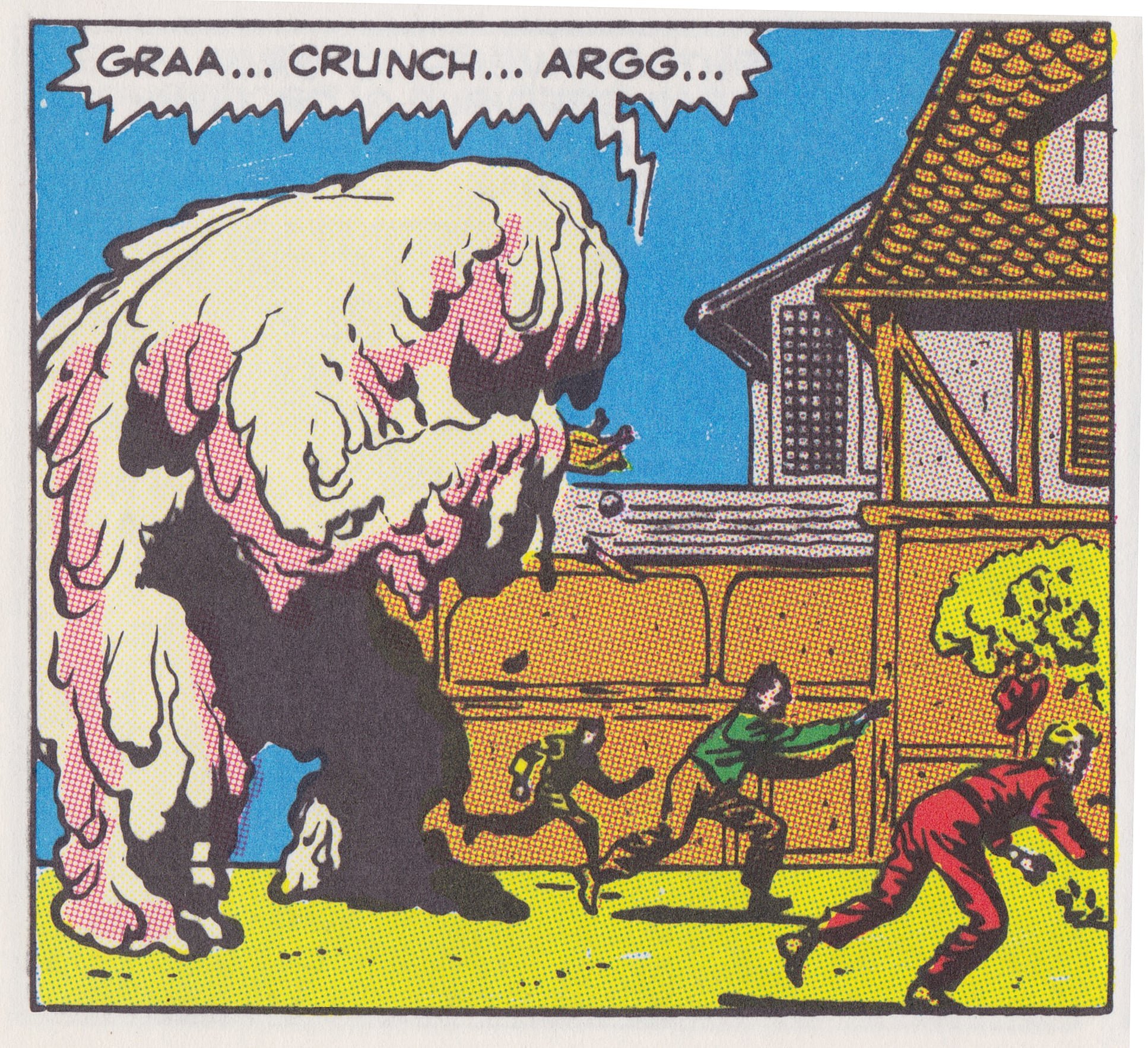
(Find your own metaphor)
If we go back, to the medieval illustrators, they had to imagine what a lion or a rhinoceros might look like, from descriptions of others.

Sure that’s a rhinoceros. Who’s gonna know?
The earliest artists we might call cartoonists pre-date the camera, and though travel might have been easier than for the medieval illustrators, they still had to draw from life and memory entirely.
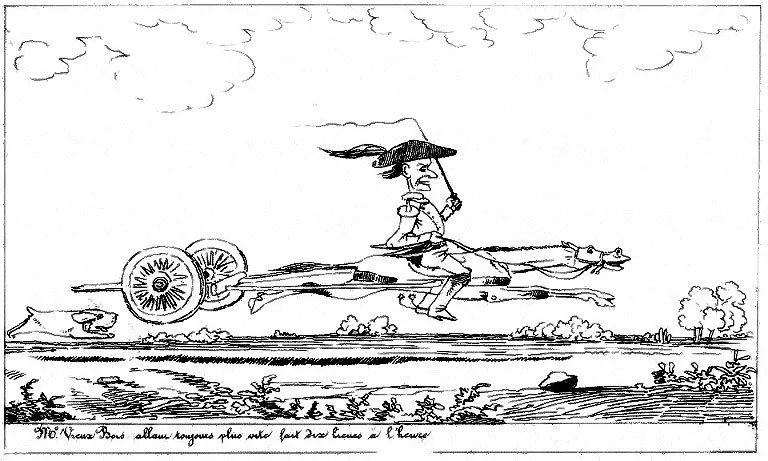
Maybe not how horses run.
Photography made some the both the inspiration and understanding and rendering of the world easier. Some cartoonists had multiple filing cabinets full of printed materials and photographs to help them render the world visually. Some traced photographs, still do. Eventually playful storytellers told whole stories using only photographs, this started in the late 1940s and still exists, though is still seen as an oddity, though it is a unique creative experience, and the process of manipulating photographs is completely different than making drawings. The creativity involved is still genuine. This point is important. A technology opens doors to new human creativity.
And then Photoshop and digital editing changed the field. Today, almost no book is made without passing through digital tools invented in the late 20th century.
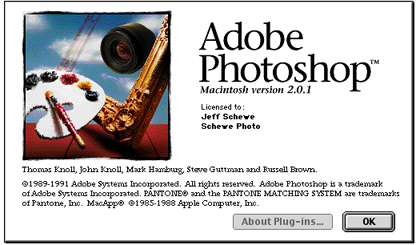
Ooh look, what does this thing do?
And beyond that, the cartoonists of yesteryear wouldn't believe the bounty of today: thousands of photos in our pockets, the world's references and inspirations on the same device. Tablets that can mimic the effect of drawing or painting or any medium, and send work to print where marvelous printers can reproduce just about anything.
Enter the 2020s and now we have Large Language Models and Artificial Intelligence. They are presented to us as all-powerful, capable of producing almost anything in mere seconds.
Creative people have responded by into a few camps.
The furious. Largely fueled, correctly, I will add, by the the theft of work it took to create these tools, these people want to see AI companies done in for.
The extremely unsettled. These people see capitalists trying to turn us all into machines for the system. They are extremely skeptical to say the least.
The mere resistors. There are always resistors of new technologies: artists who won't use photographs, etc., or who prefer the old printing methods, etc. These people aren't interested in something not made by human hand.
The AI curious. The ones who are maybe doubtful but kind of amazed and the weird new possibilities for play that this new technology engenders. For a positive, creative example of this, readers are encouraged to look at Dave McKean who wrote, "A couple of days after reading about and digesting the implications of AI image creation, I decided I could either retire or respond.". His book, Prompt, shows a creative mind at play and dialogue with this massive new technology. Artists are almost always one of two things, often both: Playful and Probing. The playful probers will undoubtedly keep using this tool as it reveals new insights to them. We don’t want to stop those experimenting going deep with these tools.
The AI all-in. We understand where these people are coming from. There's something magical about seeing a rendition of one's ideas magically appear. We get it. Those people are having fun.
At SAW, we've always valued the human. The messy human, who learns slowly but learns nonetheless. Who reveal themselves slowly through story and art, and who learn through their own processes, to see and understand others.
And despite our love of analogue tools, we know everyone that needs to learn Photoshop or Canva or Procreate or something to send their final work through email or what have you, to our global digital distribution network.
And we know AI is here to stay, but right now, the problem is that AI is not a neutral technology.
AI was trained on copyrighted work owned by human artists and companies run by humans. You can test this out by asking for work that looks like Studio Ghibli, Dave McKean, or heck, SAW even co-founder Leela Corman (Tom Hart does not seem to have been used to train! :)
AI adoption in the ludicrous "late-era" capitalistic environment has been ravenous, and the speed at which it has replaced people with no plan for how to take care of those people displaced, is anti-human, as capitalism itself is. We've now taken it to its most extreme.
AI uses, quietly, invisibly, massive ecological resources in the form of energy use.
Of course there is more, which you can find information on just about everywhere.
In sum, SAW will always be pro-human.
SAW will be largely anti-AI until at least 3, preferably 4 or 5 of these things happen:
Artists whose copyrighted work was illegally used to train are fairly compensated
Ecological costs are fairly mitigated
Substantial social Safety Nets are established nationwide, especially for younger and entry level workers whose lives are most substantially effected by displacement and replacement.
Substantial progress is made on distribution and amplification of human made culture.
The abhorrent biases currently in AI— namely, colonialist, white and male supremacist, are accounted for and significantly changed.
We recognize that there is SO MUCH grey area.
Is my Procreate brush AI?
Is the new Canva tool AI or just a good digital tool?
If I asked Siri to show me reference pictures, did I use AI?
Is my Discord Bot AI?
So chewing through all of this, our statement on use of AI at SAW is complex, like humans.
We won't allow AI-produced work in our Year Long Program, which is designed to give you skills to find your voice as a creator. We feel this is best done with your own mind and hand.
We won't allow AI-produced work in our anthologies.
The Graphic Novel Intensive (GNI) is a soft no. This program is about mindset, habits, developing your process to make your large-scale story come alive. If the intense speed of AI is working for you, then you probably don’t need the program. If you need the program, then it’s probably to develop story, planning, readability, clarity, pacing, etc. and our feeling is you can (and should) develop those parts of the process with your human intelligence. If you wish to use AI to get you to the finish line after the program, go for it.
In our other groups where getting your story out is the point, we'd rather you didn't use it. We know some of you are or will, perhaps as part of a planning process, etc. If you create AI-assisted work, you're probably having fun, or feeling a sense of ease. We get it. Please just keep it on the down-low, while the rest of us struggle - happily and with the hard-fought wisdom that comes with struggle- slowly through our processes.
We acknowledge that this statement may change. We KNOW you will change, that's the whole point of SAW. Your transformation.
We look forward to guiding and witnessing your transformation to something even more wonderfully, messily human, in the years to come.
Tom Hart, May 2026